HulaDanceHQ.com
Hula Dance Information
|
|||||||||
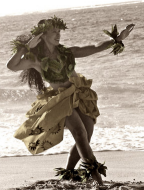
Most Common Hula Dance TermsThere are innumerable hula dancing terms that are used regularly. The practice of hula dancing and its performance is the telling of a story. Therefore, any verbal words that are used to tell a story have a sister term that helps dancers to move in a way that reflects that word. What follows are some of the most common hula dancing terms that an individual needs to know to be able to dance.
For instance, if you do not know what the word for "teacher" is, it takes a lot away from a hula lesson to keep jumping up, waving your arms and saying, "Hey Joe!" If you don't know what the word for "go" is, then the whole hula troupe could be stalled in the waiting room through a performance. So, you will find some of these terms simple and some more difficult. Our goal is to make you more comfortable and confident when you hear terms and dance. Alaka'i - Teacher of Hula. Also, Kumu Hula E makaukau? - Ready? Can also Be Emakaukau! meaning Ready! Ha'ina (ha-ee-na) - Indicates final two verses. Also can mean "This is the end of my song." "This is the end of my tale." Halau - School of Hula Instruction. Hehi miomio - Step forward placing toe on surface then tap heel before doing same with other foot. Ho`i - Exit chant for dancers Hula Auana - The more common form of hula dancing taught today. This dance is performed more for entertainment. It involved costumes that are used to enhance the dance, uses more specified body movements and hands. There are several types of instruments used for this type of hula.
Hula Haole - Hula influenced by Westerners Hula noho - Hula performed while seated. Hula Kahiko - Traditional, old-school hula. Teaches not only the hula but also the history and culture of Hawaii. This dance involved the lifestyle of the dancer and was performed as part of religious ceremonies. It involved percussion instruments, chanting and was story driven. The costumes were not made to enhance the dance but rather as part of the story being told. Required that students be dedicated, committed and follow specific rules to be able to learn and perform the dance. Hula Holoholona [hoh' loh hoh loh' nah] - Hula where dancers imitate animals. hula ho'on'n' [hoh' oh NAH' NAH'] - Any hula done for amusement. hula p'iumauma [PAH' ee'(y)oo mau mah] - Chest slapping hula Huli - The movement of turning Iluna - Raising from the knees Ilalo - Gently lowering oneself on the legs. I luna - Up I lalo - Down Imua - Forward Kala`au - Performance of hula using sticks. Kawelu - Twice on each side Kiki`i kua - Standing up then lowering the whole body back. Kiki`i noho - Leaning back from the kneeling position. Kolea - Quick three-step side to side hop/run, like a bird hunting food.. Kaholo Koloa - Waddling like a duck. Kaholoholo - Waddling like a duck twice. Kuhi no ka lima, hele no ka maka - The translation for this phrase can be looked up, however the literal meaning is to keep the eyes focused on the hands. Kupea - Anklets worn by male dancers Lele - Side step Lewa - Tilting the hips outward during sway. Maewa - Regular Hip Sway Pa! - Command made by instructor means "begin dancing." Palua - Double Time Pau - Finished, No more. Po`ohiwi ka`a - Rolling on the floor on one shoulder then landing in a position with one knee on the ground and foot of other knee on the floor.
by Hula Jack -
| |||||||||
|



 Delicious
 Digg
Digg Facebook
 Google Bookmarks
 Livejournal
 Ma.gnolia
 Newsvine
 Reddit
 Stumbleupon
 Yahoo My Web
 Twitter
 Technorati